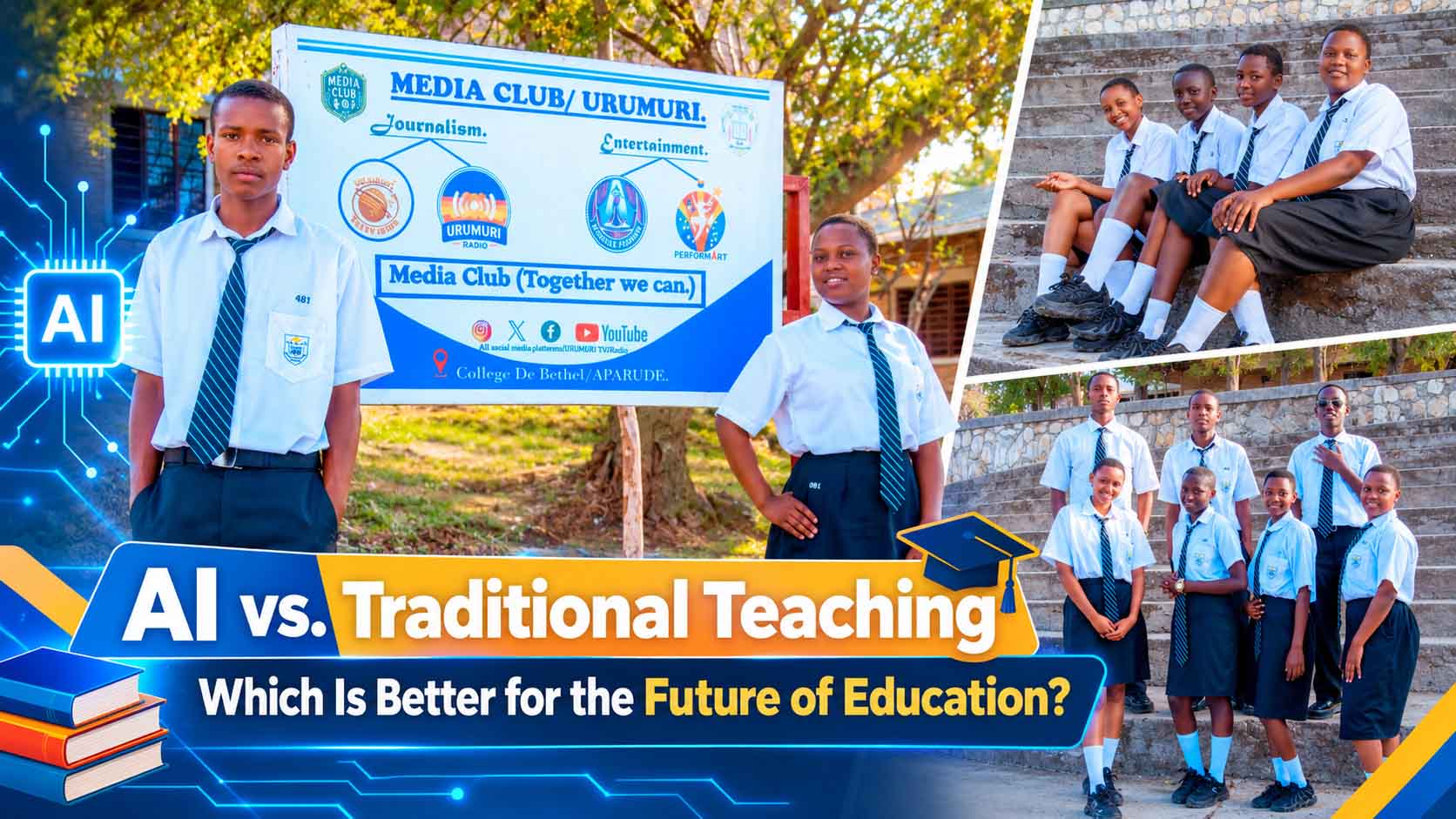
Artificial Intelligence (AI) is rapidly changing the way people work, learn, and teach. From AI-powered learning platforms to automated marking systems, technology is creating new opportunities in the education sector. Teachers and students can now use AI tools to simplify tasks, access information quickly, and improve the learning experience.
However, this development raises an important question: Are jobs that use AI better than jobs that do not use AI, especially in education?
Understanding the differences between AI-assisted work and traditional work is important for students preparing for future careers. Rather than viewing AI as a replacement for human workers, we should explore how it can support people, improve productivity, and create new opportunities while recognizing the importance of human skills.
1. What Are Jobs With AI?
Jobs with AI are occupations in which people use artificial intelligence tools to perform tasks more efficiently, solve problems, analyze information, or make better-informed decisions. In education, AI can assist teachers, students, school administrators, and educational researchers.
For example, a teacher can use AI to prepare lesson plans, generate examination questions, explain difficult concepts, and create learning materials for students with different abilities. AI-powered platforms can also provide personalized exercises based on a learner's progress.
Students can use AI to understand programming concepts, practice foreign languages, summarize lessons, and receive explanations when they encounter difficulties. School administrators may use AI-assisted tools to analyze academic performance and identify areas where students need additional support.
These applications can save time and allow teachers to focus more on classroom interaction, creativity, and individual student needs. Nevertheless, AI-generated information must be checked for accuracy, fairness, and relevance.
2. What Are Jobs Without AI?
Jobs without AI are occupations in which workers perform their responsibilities using traditional methods or tools without relying on artificial intelligence. In education, these methods include face-to-face teaching, handwritten assignments, printed textbooks, manual marking, and direct classroom discussions.
For example, a teacher may prepare a lesson using textbooks, write examination questions independently, mark students' work manually, and provide individual feedback based on personal observation.
Traditional teaching methods encourage direct human interaction, communication, teamwork, and personal relationships between teachers and students. Teachers can observe learners' emotions, encourage students who lack confidence, and provide guidance based on their individual circumstances.
However, completing every task manually can require considerable time and effort, particularly when teachers manage large classes, prepare multiple assessments, or handle extensive administrative responsibilities.
It is important to recognize that traditional education is not necessarily less effective. Its success depends on the teacher's skills, teaching methods, available resources, and students' needs.
3. Comparing Jobs With AI and Jobs Without AI in Education
The main difference between these approaches is how tasks are performed, rather than whether one type of job is automatically better than the other.
Productivity and time management: Teachers using AI can generate draft lesson plans, create practice questions, and organize learning materials more quickly. Teachers using traditional methods may need more time to complete the same tasks manually. However, the time saved through AI is valuable only when the results are accurate and useful.
Teaching and learning: AI can support personalized learning by providing additional exercises and explanations. Traditional teaching allows teachers to adapt lessons through direct observation, classroom discussion, and personal experience. Combining these approaches can help students learn more effectively.
Accuracy and decision-making: AI can process large amounts of information quickly, but it can also produce incorrect or misleading answers. Human teachers can use professional judgment and contextual knowledge to identify errors and make appropriate decisions. Teachers remain responsible for checking AI-generated educational content.
Creativity and critical thinking: AI can suggest ideas, examples, and learning activities. However, students must still develop their own reasoning, creativity, and problem-solving abilities. Depending entirely on AI can reduce opportunities to practice independent thinking.
Communication and emotional support: Human teachers provide encouragement, mentorship, discipline, and emotional understanding. AI can simulate conversations and offer assistance, but it cannot fully replace genuine human relationships and professional care.
Career opportunities: AI is creating demand for new skills in educational technology, data analysis, software development, digital learning, and AI-supported training. At the same time, traditional teaching skills remain essential. Workers who combine professional knowledge with digital competence may be better prepared for changing workplace requirements.
4. Practical Example: A Teacher With AI and a Teacher Without AI
Imagine two teachers preparing a lesson on computer networking.
The first teacher uses AI to generate a lesson outline, suggest practical activities, prepare revision questions, and explain difficult networking concepts in simpler language. The teacher then reviews the materials, corrects errors, and uses them during classroom instruction.
The second teacher prepares the lesson using textbooks, personal notes, and previous teaching experience. The teacher independently develops examples, writes questions, and prepares classroom activities.
Both teachers can deliver an effective lesson. The first may save preparation time and obtain additional teaching ideas, while the second may develop materials through established methods and personal experience.
The most effective approach may be to combine the strengths of both teachers: use AI to assist with preparation while relying on human expertise to ensure accuracy, encourage participation, and evaluate students' understanding.
5. Challenges of Using AI in Education
Although AI offers many benefits, its use also presents challenges that schools and students must understand.
First, some AI tools require reliable internet access, suitable devices, or paid subscriptions. This can create difficulties for schools and learners with limited resources.
Second, AI may provide incorrect information, reflect bias, or produce answers that do not match the local curriculum. Teachers and students must verify important information rather than accepting every answer without question.
Third, excessive dependence on AI can weaken independent learning when students use it to complete assignments without understanding the subject. Schools should encourage learners to use AI as a learning assistant, not as a substitute for their own thinking.
Finally, privacy and academic integrity must be protected. Students should avoid sharing confidential personal information with AI tools and should follow their school's rules on acceptable AI use.
6. Skills Students Need for the Future
As AI becomes more common in the workplace, students should prepare by developing both technical and human skills.
Important skills include digital literacy, critical thinking, communication, creativity, problem-solving, teamwork, data analysis, and basic understanding of AI technologies. Students studying computer science and information technology can also explore programming, cybersecurity, networking, and the development of AI-powered applications.
Most importantly, students should learn how to ask useful questions, verify information, recognize AI limitations, and apply technology ethically.
The future of work will not depend only on knowing how to use AI. It will also depend on understanding real problems, making responsible decisions, and working effectively with other people.
Artificial Intelligence is transforming education by helping teachers prepare lessons, supporting personalized learning, automating repetitive tasks, and creating new opportunities for professional development. Traditional teaching methods, however, remain valuable because they promote human interaction, personal guidance, independent thinking, and meaningful relationships between teachers and students.
Therefore, jobs with AI are not automatically better than jobs without AI, and AI should not be viewed simply as a replacement for human workers. The real advantage comes from understanding when and how to use technology effectively.
For students, the message is clear: Do not fear AI; learn how to use it wisely. Develop your technical knowledge, strengthen your human skills, and practice responsible technology use. For teachers and schools, the goal should be to integrate AI in ways that improve learning while keeping human judgment and student development at the center of education.
The future of education belongs not simply to those who use AI or those who avoid it, but to people who can combine technological innovation with knowledge, creativity, responsibility, and human understanding.